
Latest Insights
Blog details
Blog details
Explore practical insights on websites, SEO, online visibility, and digital strategy to help your business grow online.
Explore practical insights on websites, SEO, online visibility, and digital strategy to help your business grow online.
Website Design
How Much Does a Professional Website Really Cost?
Website pricing can vary dramatically depending on the platform, features, design requirements, and long-term goals. Learn what businesses should expect to invest and what factors influence the true cost of a professional website.
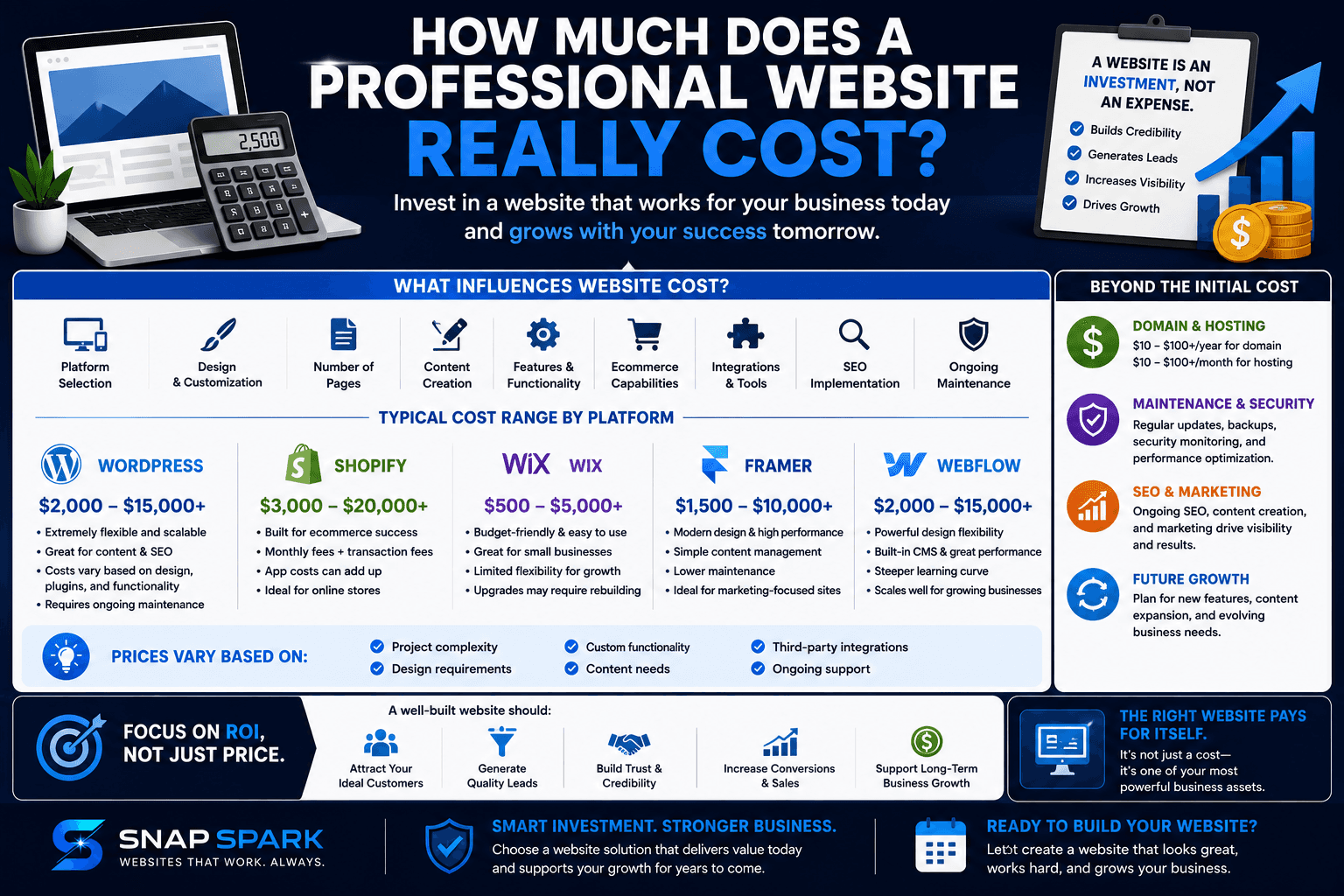
How Much Does a Professional Website Really Cost?
One of the most common questions business owners ask is:
"How much should a professional website cost?"
The answer is often frustrating because there is no universal price.
Some businesses spend less than $100 to launch a website.
Others invest several thousand dollars or more.
The difference comes down to what the website is designed to accomplish.
A website is not simply a collection of pages on the internet. It is a business asset that can influence credibility, visibility, lead generation, customer trust, and long-term growth.
Understanding what contributes to website pricing can help businesses make smarter decisions and avoid costly mistakes.
Why Website Prices Vary So Much
If you've ever requested website quotes, you've probably noticed a wide range of pricing.
One provider may quote a few hundred dollars.
Another may quote several thousand.
This often leaves business owners wondering why the difference is so large.
The reality is that websites are not all built the same.
Pricing is influenced by:
Platform selection
Number of pages
Design requirements
Content creation
SEO implementation
Functionality
Ecommerce features
Integrations
Ongoing maintenance
Two websites may look similar on the surface while having completely different levels of functionality and long-term value.
The DIY Website Approach
Many businesses begin with a do-it-yourself solution.
Platforms such as Wix, Squarespace, Shopify, and Framer make it easier than ever to launch a website without hiring a professional.
Typical costs may include:
Monthly platform fees
Domain registration
Premium templates
Third-party apps
The primary advantage is affordability.
However, businesses often discover that building a website is only part of the challenge.
Questions quickly arise such as:
Is the website optimized for search engines?
Is the messaging effective?
Is it generating leads?
Is it converting visitors?
Is it built for future growth?
A low-cost website can become expensive if it fails to produce results.
The Cost of Professional Website Design
Professional website design involves far more than selecting colors and adding images.
A professionally built website often includes:
Business research
Competitor analysis
Website planning
Content structure
User experience design
Mobile optimization
Search engine optimization
Conversion strategy
Technical setup
Performance optimization
The goal is not simply to create a website.
The goal is to create a website that supports business growth.
This additional planning and expertise often explains the difference between a DIY website and a professionally built solution.
Website Platforms Influence Cost
Different platforms come with different costs.
For example:
WordPress
Potential costs may include:
Hosting
Premium plugins
Security tools
Maintenance
Backups
WordPress offers exceptional flexibility but often requires ongoing management.
Shopify
Shopify typically includes:
Monthly subscription fees
Transaction fees
Ecommerce apps
Premium themes
Shopify is designed specifically for online stores and ecommerce businesses.
Wix
Wix generally offers:
Predictable monthly pricing
Hosting included
Minimal maintenance
It is often attractive for businesses seeking simplicity.
Framer
Framer provides:
Modern design capabilities
Fast performance
Simple content management
Many businesses choose Framer because it combines visual appeal with relatively low maintenance requirements.
Webflow
Webflow often appeals to businesses seeking:
Custom design flexibility
Strong CMS functionality
Modern performance
Costs vary depending on complexity and content requirements.
Cheap Websites Can Become Expensive
Many businesses focus exclusively on the initial price.
Unfortunately, the lowest-cost option is not always the most affordable long-term solution.
Examples include:
Poor SEO performance
Limited functionality
Difficult updates
Security problems
Slow loading speeds
Expensive redesigns later
A website that needs to be rebuilt after one or two years often costs more than investing in the right solution from the beginning.
Content Creation Has Value
Many business owners underestimate the amount of work involved in creating website content.
Content often includes:
Home page copy
Service pages
About pages
FAQ sections
Landing pages
Blog content
Effective content should:
Explain services clearly
Build trust
Improve search visibility
Encourage conversions
The quality of the content can significantly impact the performance of the website.
SEO Is Often a Separate Investment
A common misconception is that launching a website automatically results in search engine visibility.
It doesn't.
A website and SEO are related, but they are not the same thing.
SEO may involve:
Keyword research
Technical optimization
Content development
Internal linking
Local SEO
Google Business Profile optimization
Ongoing content creation
Businesses that depend on online visibility should view SEO as an ongoing investment rather than a one-time task.
Maintenance Costs Should Be Expected
Every website requires some level of maintenance.
Common maintenance activities include:
Software updates
Security monitoring
Backups
Performance optimization
Content updates
Technical troubleshooting
Ignoring maintenance often leads to larger and more expensive problems later.
The true cost of a website includes both the initial build and the ongoing effort required to keep it secure and effective.
Think About Return on Investment
When evaluating website costs, it is important to focus on value rather than price alone.
A website that generates:
Leads
Appointments
Sales
Phone calls
Customer inquiries
can provide significant return on investment over time.
The cheapest website is not necessarily the best investment.
The most valuable website is often the one that helps achieve business goals consistently.
Questions to Ask Before Hiring a Website Designer
Before investing in a website, ask:
What platform will be used?
Who owns the website?
Who manages updates?
What SEO work is included?
Is the website mobile friendly?
What happens after launch?
Are future changes easy to make?
What maintenance will be required?
The answers can reveal significant differences between proposals.
The Cost of Doing Nothing
Many businesses delay updating or replacing an outdated website because they want to avoid spending money.
However, outdated websites often create hidden costs.
Examples include:
Lost leads
Reduced credibility
Lower search visibility
Poor user experience
Missed opportunities
In many cases, the cost of an ineffective website is greater than the cost of improving it.
Final Thoughts
A professional website is an investment in your business's visibility, credibility, and growth.
While pricing varies depending on goals, functionality, and platform selection, businesses should focus on long-term value rather than the lowest upfront price.
The right website should support marketing efforts, build trust, generate leads, and grow alongside the business.
When viewed through that lens, the question becomes less about what a website costs and more about what the right website can help your business achieve.
How Much Does a Professional Website Really Cost?
One of the most common questions business owners ask is:
"How much should a professional website cost?"
The answer is often frustrating because there is no universal price.
Some businesses spend less than $100 to launch a website.
Others invest several thousand dollars or more.
The difference comes down to what the website is designed to accomplish.
A website is not simply a collection of pages on the internet. It is a business asset that can influence credibility, visibility, lead generation, customer trust, and long-term growth.
Understanding what contributes to website pricing can help businesses make smarter decisions and avoid costly mistakes.
Why Website Prices Vary So Much
If you've ever requested website quotes, you've probably noticed a wide range of pricing.
One provider may quote a few hundred dollars.
Another may quote several thousand.
This often leaves business owners wondering why the difference is so large.
The reality is that websites are not all built the same.
Pricing is influenced by:
Platform selection
Number of pages
Design requirements
Content creation
SEO implementation
Functionality
Ecommerce features
Integrations
Ongoing maintenance
Two websites may look similar on the surface while having completely different levels of functionality and long-term value.
The DIY Website Approach
Many businesses begin with a do-it-yourself solution.
Platforms such as Wix, Squarespace, Shopify, and Framer make it easier than ever to launch a website without hiring a professional.
Typical costs may include:
Monthly platform fees
Domain registration
Premium templates
Third-party apps
The primary advantage is affordability.
However, businesses often discover that building a website is only part of the challenge.
Questions quickly arise such as:
Is the website optimized for search engines?
Is the messaging effective?
Is it generating leads?
Is it converting visitors?
Is it built for future growth?
A low-cost website can become expensive if it fails to produce results.
The Cost of Professional Website Design
Professional website design involves far more than selecting colors and adding images.
A professionally built website often includes:
Business research
Competitor analysis
Website planning
Content structure
User experience design
Mobile optimization
Search engine optimization
Conversion strategy
Technical setup
Performance optimization
The goal is not simply to create a website.
The goal is to create a website that supports business growth.
This additional planning and expertise often explains the difference between a DIY website and a professionally built solution.
Website Platforms Influence Cost
Different platforms come with different costs.
For example:
WordPress
Potential costs may include:
Hosting
Premium plugins
Security tools
Maintenance
Backups
WordPress offers exceptional flexibility but often requires ongoing management.
Shopify
Shopify typically includes:
Monthly subscription fees
Transaction fees
Ecommerce apps
Premium themes
Shopify is designed specifically for online stores and ecommerce businesses.
Wix
Wix generally offers:
Predictable monthly pricing
Hosting included
Minimal maintenance
It is often attractive for businesses seeking simplicity.
Framer
Framer provides:
Modern design capabilities
Fast performance
Simple content management
Many businesses choose Framer because it combines visual appeal with relatively low maintenance requirements.
Webflow
Webflow often appeals to businesses seeking:
Custom design flexibility
Strong CMS functionality
Modern performance
Costs vary depending on complexity and content requirements.
Cheap Websites Can Become Expensive
Many businesses focus exclusively on the initial price.
Unfortunately, the lowest-cost option is not always the most affordable long-term solution.
Examples include:
Poor SEO performance
Limited functionality
Difficult updates
Security problems
Slow loading speeds
Expensive redesigns later
A website that needs to be rebuilt after one or two years often costs more than investing in the right solution from the beginning.
Content Creation Has Value
Many business owners underestimate the amount of work involved in creating website content.
Content often includes:
Home page copy
Service pages
About pages
FAQ sections
Landing pages
Blog content
Effective content should:
Explain services clearly
Build trust
Improve search visibility
Encourage conversions
The quality of the content can significantly impact the performance of the website.
SEO Is Often a Separate Investment
A common misconception is that launching a website automatically results in search engine visibility.
It doesn't.
A website and SEO are related, but they are not the same thing.
SEO may involve:
Keyword research
Technical optimization
Content development
Internal linking
Local SEO
Google Business Profile optimization
Ongoing content creation
Businesses that depend on online visibility should view SEO as an ongoing investment rather than a one-time task.
Maintenance Costs Should Be Expected
Every website requires some level of maintenance.
Common maintenance activities include:
Software updates
Security monitoring
Backups
Performance optimization
Content updates
Technical troubleshooting
Ignoring maintenance often leads to larger and more expensive problems later.
The true cost of a website includes both the initial build and the ongoing effort required to keep it secure and effective.
Think About Return on Investment
When evaluating website costs, it is important to focus on value rather than price alone.
A website that generates:
Leads
Appointments
Sales
Phone calls
Customer inquiries
can provide significant return on investment over time.
The cheapest website is not necessarily the best investment.
The most valuable website is often the one that helps achieve business goals consistently.
Questions to Ask Before Hiring a Website Designer
Before investing in a website, ask:
What platform will be used?
Who owns the website?
Who manages updates?
What SEO work is included?
Is the website mobile friendly?
What happens after launch?
Are future changes easy to make?
What maintenance will be required?
The answers can reveal significant differences between proposals.
The Cost of Doing Nothing
Many businesses delay updating or replacing an outdated website because they want to avoid spending money.
However, outdated websites often create hidden costs.
Examples include:
Lost leads
Reduced credibility
Lower search visibility
Poor user experience
Missed opportunities
In many cases, the cost of an ineffective website is greater than the cost of improving it.
Final Thoughts
A professional website is an investment in your business's visibility, credibility, and growth.
While pricing varies depending on goals, functionality, and platform selection, businesses should focus on long-term value rather than the lowest upfront price.
The right website should support marketing efforts, build trust, generate leads, and grow alongside the business.
When viewed through that lens, the question becomes less about what a website costs and more about what the right website can help your business achieve.
Recent post
Ready to Strengthen Your Online Presence?
Whether you need a new website, better visibility on Google, or a strategy for growth, Snap Spark can help you build a stronger digital presence.
Ready to Strengthen Your Online Presence?
Whether you need a new website, better visibility on Google, or a strategy for growth, Snap Spark can help you build a stronger digital presence.
Ready to Strengthen Your Online Presence?
Whether you need a new website, better visibility on Google, or a strategy for growth, Snap Spark can help you build a stronger digital presence.